What Runners with Arthritis Should Know Before Knee Replacement

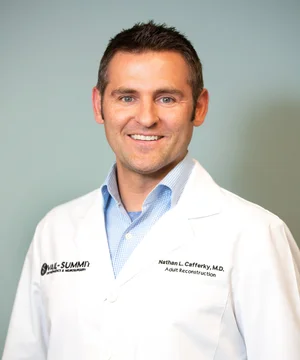
A Guide with Dr. Nathan Cafferky
Quick Takeaways
Many runners live with knee arthritis for years before considering surgery.
X-rays alone do not determine whether you need a knee replacement.
A new knee can relieve pain and improve mobility, but it is not identical to a natural knee.
Lower-impact activities are often recommended to maximize implant longevity.
The decision to undergo bone on bone knee surgery should be based on symptoms, function, and quality of life.
For many runners, slowing down is harder than dealing with pain.
It's common for athletes to adjust mileage, skip hills, or rely on braces and injections long before they ever consider knee replacement. But when arthritis starts affecting everyday activities — not just running — it may be time to explore your options.
According to Dr. Nathan Cafferky, joint replacement specialist at The Steadman Clinic, the decision to proceed with surgery isn't based solely on imaging.
"We treat patients, not X-rays," says Dr. Cafferky. "The most important question is how much the knee is limiting your life."
When Arthritis Starts Winning
Many runners can tolerate occasional soreness. What becomes more concerning is when symptoms persist beyond workouts.
Common signs include:
Pain that lingers throughout the day
Swelling after activity
Difficulty walking or standing for long periods
Trouble navigating stairs
Stiffness after sitting or sleeping
While some patients are told they may need bone on bone knee surgery, the timing depends on much more than cartilage loss. The real consideration is whether pain is preventing you from doing the things you enjoy.
Not Every Bone-on-Bone Knee Needs Surgery
A surprising number of patients with advanced arthritis continue to function well without surgery.
Physical therapy, strength training, activity modification, medications, and injections may all help manage symptoms. However, when those treatments stop providing relief, conversations about bone on bone knee surgery often become more relevant.
What Should You Expect From a New Knee?
A new knee is designed to reduce pain and restore function, allowing patients to return to a more active lifestyle.
Most patients begin walking shortly after surgery and start rehabilitation almost immediately. Recovery requires commitment, but those who actively participate in therapy often see significant improvements in mobility and comfort.
Can You Run After Knee Replacement?
Some patients do return to running after receiving a new knee, but it is generally not the activity most surgeons encourage.
Dr. Cafferky often compares a knee replacement to a vehicle. The harder you drive it, the faster components wear over time. While modern implants are incredibly durable, repetitive high-impact activities can place additional stress on the replacement.
For that reason, many patients are encouraged to focus on lower-impact activities such as cycling, hiking, swimming, skiing, and strength training. These activities help patients stay active while promoting the long-term success of their new knee.
Finding the Right Surgeon
When researching the best knee replacement surgeon near me, look for a specialist who understands both joint replacement and active lifestyles.
Whether you're considering conservative treatment or evaluating bone on bone knee surgery, a thorough evaluation can help determine the right path forward.
Many patients searching for the best knee replacement surgeon near me are relieved to learn that surgery isn't always the first recommendation. The best treatment plan is the one that matches your goals, symptoms, and lifestyle.
If knee pain is preventing you from running, exercising, or enjoying everyday activities, meeting with the best knee replacement surgeon near me can help you better understand your options.
About Dr. Nathan Cafferky
Dr. Nathan Cafferky is a board-certified orthopedic surgeon and joint replacement specialist at The Steadman Clinic, with offices in Vail and Frisco. His practice focuses on advanced hip and knee replacement procedures designed to help patients stay active, move comfortably, and return to the lifestyles they enjoy.