Is My Knee Replacement Failing? Early Warning Signs

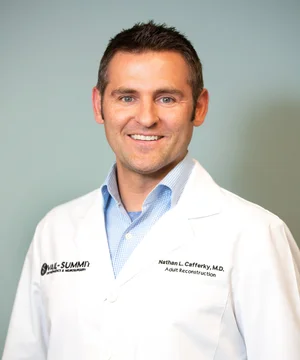
A Guide with Dr. Nathan Cafferky
Quick Takeaways
Most knee replacements provide excellent pain relief for 15 to 20 years or longer.
Persistent pain, swelling, or instability may be signs of knee replacement failure.
Many painful knee replacements can be treated without revision surgery.
Early evaluation helps identify the cause and protect your long-term outcome.
Knee replacement surgery is one of the most successful procedures in orthopedics, helping millions of patients return to walking, hiking, skiing, and other activities with less pain. However, if your knee begins hurting months or years after surgery, you may wonder whether something has gone wrong.
"The vast majority of knee replacements function extremely well for many years," says Dr. Nathan Cafferky. "When symptoms change or become persistent, it's important to determine why."
Recognizing a failing knee replacement early allows your orthopedic surgeon to identify the cause and recommend the most appropriate treatment.
What Are the Warning Signs?
While occasional soreness after activity can be normal, several symptoms deserve medical attention. Common signs of knee replacement failure include:
Increasing or persistent knee pain
Swelling that doesn't improve
A feeling that the knee is unstable or giving way
Difficulty bending or straightening the knee
Painful clicking or grinding sensations
These symptoms do not automatically mean you have a failing knee replacement, but they should not be ignored. A thorough evaluation can determine whether the implant is functioning properly or if another condition is responsible for your discomfort.
What Causes Knee Replacement Failure?
Several issues can lead to ongoing pain after surgery, including implant loosening, infection, instability, implant wear, scar tissue, or fractures around the implant. In some cases, pain may actually originate from the hip, spine, or surrounding muscles rather than the knee itself.
Fortunately, unsuccessful knee replacement surgery is relatively uncommon. Modern implants, improved surgical techniques, and advances in rehabilitation have significantly improved patient outcomes over the past several decades.
Do You Need Revision Surgery?
Not necessarily.
Many patients worry that pain means revision surgery is inevitable, but that is often not the case. Depending on the cause, treatment may include physical therapy, medication, injections, or other nonsurgical options.
If revision surgery is needed, today's techniques can successfully address many causes of unsuccessful knee replacement surgery and help restore stability, function, and comfort.
When Should You See an Orthopedic Surgeon?
If your knee replacement becomes increasingly painful, swollen, or unstable, don't wait to seek an evaluation. Early diagnosis often provides more treatment options and may prevent additional joint damage.
Patients experiencing signs of knee replacement failure should schedule an evaluation with an experienced joint replacement specialist. Whether your symptoms are caused by a failing knee replacement or another condition, identifying the source is the first step toward getting back to the activities you enjoy.
About Dr. Nathan Cafferky
Dr. Nathan Cafferky is a board-certified orthopedic surgeon and joint replacement specialist at The Steadman Clinic with offices in Vail and Frisco. He specializes in primary and revision joint replacement, helping patients recover from unsuccessful knee replacement surgery and return to active, pain-free lifestyles.