Why Cycling Is Often the First Sport to Return to After Joint Replacement

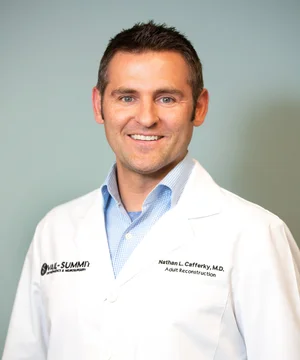
A Guide with Dr. Nathan Cafferky
Quick Takeaways
Cycling is low impact and joint friendly after hip and knee replacement.
Many patients begin stationary biking early during recovery.
Cycling helps improve mobility, strength, and endurance.
Both knee replacement cycling and hip replacement cycling support active lifestyles after surgery.
Patients often return to biking before higher impact sports like skiing or tennis.
Whether recovering from a hip or knee replacement, cycling is often one of the first sports patients safely return to because it places relatively low stress on the joints while helping restore movement and strength.
Dr. Nathan Cafferky, a joint replacement specialist at The Steadman Clinic, frequently recommends cycling as part of the recovery process. As Dr. Nathan Cafferky explains, “Cycling is one of the best activities after joint replacement because it helps patients regain mobility and strength without excessive impact on the joint.”
Why Cycling Works So Well
Cycling provides smooth, controlled motion that helps improve flexibility and reduce stiffness after surgery.
For patients focused on cycling after new knee surgery, biking helps strengthen the muscles around the knee while supporting mobility during recovery. Many patients find knee replacement cycling feels comfortable relatively early because the bike supports body weight while encouraging movement.
Similarly, biking after new hip surgery allows patients to improve hip mobility and endurance without the pounding forces associated with running.
Both hip replacement cycling and knee replacement cycling also help improve circulation, cardiovascular fitness, and confidence during rehabilitation.
When Can Patients Return to Cycling?
Recovery timelines vary, but many patients begin using a stationary bike within several weeks after surgery under the guidance of their surgeon or physical therapist.
Early biking after new hip surgery and cycling after new knee surgery usually starts with:
Low resistance
Short sessions
Controlled stationary biking
Gradual progression over time
Outdoor cycling often returns once balance, strength, and reaction time improve.
Returning to an Active Lifestyle
For many patients in Colorado mountain communities, cycling represents freedom, independence, and returning to the activities they love.
Because it is low impact and highly adaptable, hip replacement cycling and knee replacement cycling are often among the earliest athletic milestones patients achieve after surgery.
About Dr. Nathan Cafferky
Dr. Nathan Cafferky is a board certified orthopedic surgeon and joint replacement specialist at The Steadman Clinic, with offices in Vail and Frisco. His practice focuses on hip and knee replacement procedures designed to help patients return to active lifestyles with improved mobility and reduced pain.