What Knee Replacement Material Lasts the Longest?
A Guide to Durable Implants with Dr. Nathan Cafferky
When choosing the best material for knee replacement, patients want confidence that their implant will last for decades of movement and activity. Modern advancements in knee implant design have significantly improved durability, comfort, and performance, but not all materials function the same.
Below, Dr. Nathan Cafferky, board certified orthopedic surgeon and joint replacement specialist at The Steadman Clinic in Frisco and Vail, Colorado, explains the types of knee replacement materials, how they differ, and which options offer the longest lifespan.
What Are the Most Common Types of Knee Replacement Materials
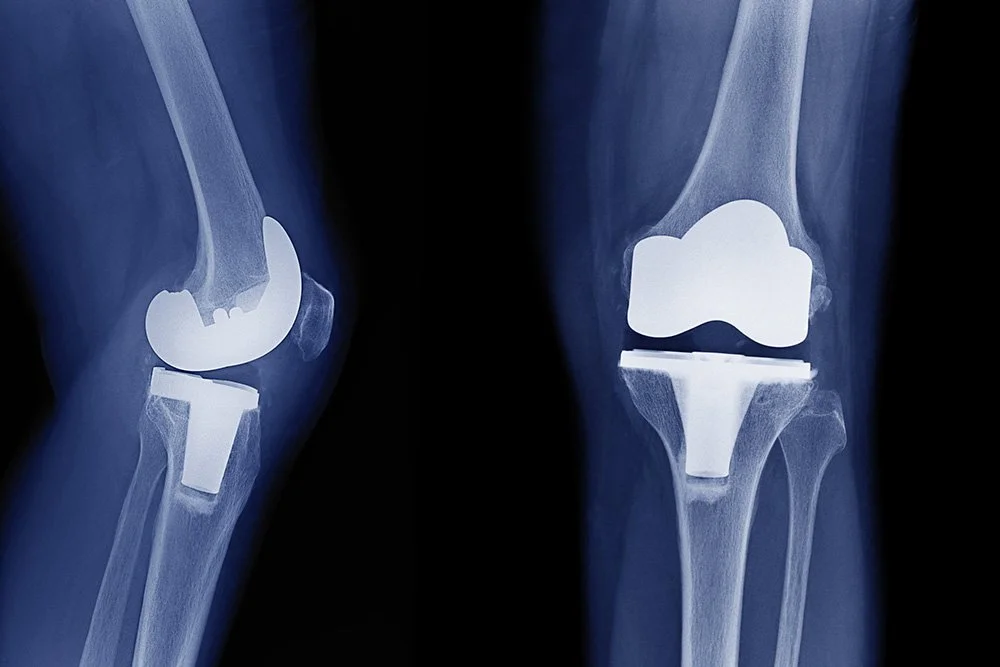
Today’s knee implants primarily use two established and proven types of knee replacement materials:
Cobalt chromium paired with highly durable polyethylene
Titanium on polyethylene, used specifically for patients with nickel sensitivity
These hard on soft combinations are designed to reduce friction, resist corrosion, and maintain smooth movement through years of use.
“Understanding how each material behaves over time is important in choosing the right implant for each individual patient,” says Dr. Cafferky, who specializes in robotic assisted total knee replacements.
What Is the Best Material for Knee Replacement Longevity
So what is the best material for knee replacement when it comes to long term durability? For the knee, the proven and widely accepted standard is cobalt chromium on polyethylene. This pairing has shown excellent long term clinical results, predictable wear patterns, and consistently strong performance.
For patients with a nickel allergy, titanium on polyethylene is used as a safe and durable alternative. Titanium offers excellent biocompatibility and avoids any reaction risk while still maintaining longevity.
“I use cobalt chromium on poly as my primary implant and titanium on poly for patients with nickel sensitivity,” says Dr. Cafferky. “These combinations continue to provide reliable, long lasting results in my hands.”
Why Ceramic Is Not Used for Knee Implants
Patients sometimes hear about ceramic technology in hip replacements and assume it applies to knees as well. While ceramic is an outstanding and inert material for hip implants, its behavior is very different in the complex mechanics of the knee.
There are a few ceramic knee designs in existence, but they are not the same as the ceramic hip technology patients may be familiar with. A fully ceramic knee on polyethylene is not FDA approved in the United States because ceramic components can fracture under the multi directional stresses of knee motion. The round femoral head of a hip creates a safer environment for ceramic surfaces compared to the bending, gliding, rolling, and rotational forces that occur in the knee.
The ceramic options that are FDA approved for knees involve ceramic coatings applied over a metallic base rather than a true ceramic component.
“Ceramic is excellent for hips, but the complex motion of the knee increases the risk of ceramic fracture,” explains Dr. Cafferky. “For that reason, cobalt chromium and titanium remain the most reliable and time tested materials for knee replacement.”
How Long Do Modern Knee Replacements Last
With accurate alignment, precise surgical technique, and appropriate post operative care, modern knee replacements routinely last 20 years or longer. As the types of knee replacement materials continue to advance, patients can return to active mountain lifestyles with greater confidence and a lower risk of revision surgery.
Choosing the best material for knee replacement helps ensure long term stability, smooth movement, and strong functional outcomes.
About Dr. Nathan Cafferky
Dr. Nathan Cafferky is a board certified orthopedic surgeon and joint replacement specialist at The Steadman Clinic in Frisco and Vail, Colorado. He is nationally recognized for his expertise in hip and knee replacement surgery, using advanced materials and robotic assisted techniques that maximize precision, durability, and patient satisfaction. Contact his team today to learn more.